Please send in any other theories to me.
The Koberstein Surname has several levels of meaning.
First and most obviously it is a Germanic name.
On a word meaning basis, Kober was found in the Cassell's German English Dictionary listed with the meaning of basket or hamper. Stein was listed in the same reference as stone, rock; flint; jewel, gem; monument. Stein is also listed as refering to chessmen or pieces, a man in the game of draughts, the stone or kernal of a fruit. Further Stein is used is several german phrases such as "stein des Anstosses" (stumbling block), "mir fallt ein stein vom Herzen" (it is a load off my mind) etc. So Koberstein is literally, stone basket. Or as in the case of the imfamous beerstein, a stone cup.
The book "Genealogie Koberstein" by Edith and Hans Schutte (written in German) goes into conciderable detail on the derivation of Koberstein as a surname. This book is out of print now but is available online at familysearch.org. Briefly the name derives from Kobern on the Mosel River, a family of nobility. Then in relation to the Koberner Knights, which established three castles named Koberstein. Presumably the stein refers to the stone nature of the castle and the Kober may relate to the moats around the castle. One castle is on the present day Czech / Poland border, one in Poland and one near Altenkirchen.
Recently another idea was sent in by Ute Koberstein of Essen, Germany. To quote, "Your Koberstein site is really most interesting! Here's just a small note to remark that according to yet another interpretation I have recently come across, Koberstein might also stem from the old German word "Kuiper" - another expression for "Kupfer" (copper). If that is correct, a "Koberstein" could also be an anvil and hence indicate that there are some smiths hidden in the family tree..."
Here is another interesting thought, Hi : saw your web-site. I am very familiar with the Island of Ruegen and therefore " Altenkirchen ". I was born in Goehren / Ruegen and lived there until 1978. On the Island, the original settlers speaking "Platt German", a mixture of Dutch, old German, English and Swedish. I still can speak some of it; understand it all however. We used to say "Cobber" which means Copper. Hundreds of years ago, people on the Island used a tool made out of Copper & Stone. >>> Kupfer Stein <<<< Koberstein. Regards, Robert Haase
Here is some interesting information about a possible Polish translation of Koberstein as Kaminski:
I was surprised to see there is a listing -- so many ethnic Germans fled from Poland after World War II that we usually don't find many names that are obviously German in origin. German names that were common in Poland before 1939 now show up with tiny numbers, or don't show up at all, so I halfway expected there'd be no Kobersteins. But the Directory shows that as of 1990 there were 59, living in the provinces of Poznan (46), Wroclaw (10), and Zielona Gora (3). There was also 1 Koberstejn in Katowice province, and 2 Kobersztejn's in Warsaw province -- both of those are Polonized forms, adapting the spelling to represent the pronunciation of the German name by Polish phonetic values... I'm afraid I don't have access to any further details, so I can't give you first names or addresses or anything else for those Kobersteins; what I've given is all I have. I hope it's some help to you.
As for the meaning, none of my sources mention a meaning for Koberstein -- KOBER is a basket or hamper or back-pack, and as a surname usually refered to a maker or user of such, and STEIN of course is "stone" or "rock." So it's a little hard to figure exactly what KOBERSTEIN meant. What I can tell you is that there's a semantic link: the root of Polish Kaminski, _kamien_, means "stone, rock." The surname Kaminski usually referred to some connection between a person and rock, or to his coming from a place named Kamien or Kamin. So there's a clear link between the "stein" part and the root of Kaminski. But I don't think you can say the names are equivalents; Stein would be the most accurate German translation of Kaminski.
One thought does occur to me: in Polish the vowels O and A are often pronounced very similarly, and so they sometimes fluctuate in name spellings. And _komin_ is "chimney" in Polish. So if KOBERSTEIN should happen to have some connection with "chimney" (maybe in some regional dialect), it is at least possible Kaminski in this case is a variant of Kominski. That's kind of far-fetched, and most of the time Kaminski unquestionably comes from the word for "stone, rock." But I thought it wouldn't hurt to mention this, just in case it proves useful to you at some point.
I hope this information is some help to you, and wish you the best of luck with your research.
William F. Hoffman, Author, "Polish Surnames: Origins & Meanings", PGSA Publications Editor <www.pgsa.org>
Here is some more information about the meaning and origin of "Koberstein" from the "Dictionary of Names" by Hans Bahlow's:
KOBERSTEIN (a compound name from Kober and Stein)
KOBER: (Upper German, Middle High German) "pack basket" (basket to be carried on one's back). In Eastern German, Slavic kovar "blacksmith" might be involved. Georg Cober, Liegnitz 1372, Hensel Coberman, Liegnitz 1372 (Family Name Kovermann is the modern form), Herman Koberl, Deutsch-Brod 1343. H Köberlin, Franconia 1370. Enlarged: Koberer, Köberer; Gerlach Coberer, Worms 1321.
STEIN [stone] (frequent): mostly from the common place name Stein, hence also "vom Stein," compare Baron "vom und zum Stein." For Steinle, Steindl, compare also personal names Steinhard, Steinmar. See also Low German Steincke, Steen.
Here is some information from George Kobernus (homepage: http://members.aol.com/gkobernus/index.html)
I run into the Koberstein name all the time when researching the Kobernuss/Kubbernuss family. My name translates into "Nutbasket" or basket of nuts etc according to Buelow's dictionary. I've had a couple of people say it was of Swedish origin due to the Swedish occupation for more than a hundred years of the Mecklenburg/Pommern region. I've often wondered where the origin of the several "KOBERXXX/COBERXXX" variations come from. I've researched my family name KOBERNUSS, COBERNUSS, KUBBERNUSS. The earliest mention in Germany appears to be about 1458 in Malchin near the Meck/Vorpommern border. There is a KOBERN village on the Mosel that I visted once but they don't know where the name came from. Buehler dictionary says "Nut" or "Nut Basket"
Here is another interesting view of our name. I am quoting from a certificate issued by The Historical Research Center. You may obtain a copy by contacting them at 632 South Military Trail, Deerfield Beach, FL 33442 or call at (954) 421-8713. Quoted by permission.
"The German family name Koberstein is classified as being of habitation origin. Habitation names are those family names which are derived from either the location of the place of residence of the initial bearer or from the name of the town or village from whence he hailed. In some instances, a habitation names refers to a residence which was distinguished by a sign or engraving usually displayed over the door. In this particular instance, the name Koberstein is derived from the Low German "koper", from the Middle High German "kupfer", meaning "copper"and "stein", meaning "rock, stone, mountain", indicating "one who lived near a mountain where copper was found". Variants of the surname Koberstein include Kop(p)erstein and Coberstein.
One of the earliest references to this name or to variant is a record of one Daniel Koberstein (recorded in 1663), the artist. However, research is of course ongoing and this name may have been documented even earlier than the date indicated above. Georg Koberstein and Anna Catharina Glassbrenner were married in Daisback, Heidelberg, Baden, on June 17, 1749 and Adelgunde Edmunde Koberstein, daughter of Carl Wilhelm Koberstein and Louise Dorothee Sterbeck, was christened in the church of Sankt Georgen in Berlin on April 27, 1845. Notable bearers of the surname Koberstein include K. Koberstein (listed in 1797), the linguist, and August Karl Koberstein (died 1870), the historian of literature. Onomastic research shows that fixed hereditary family names were first employed in southern Germany in the twelfth century. This practice of adopting a distinguishing name which was retained from one generation to the next gradually expanded to include all German speaking areas. It was however not until the sixteenth century that we can categorically say that the vast majority of Germans bore a family name that had been born by their father."
References given are:
1. Entymologisches Worterbuch der DeutschenFamillennamen
2. Armorial General Rietstaps
3. Rolland's Companion to Rietstaps
4. Dictionnaire Etymologique des Noms de Famille et Prenames deFrance
5. El Solar Vasco Navarro
6. El Solar Catalan, Valenciano y Belear
7. General Index zu den Seibmacher schen Wappenbucher 1605-1967
8. Dizionario Storico Blasonico
9. Irish Families-Their Names, Arms, and Origins
10. The General Armoury of England, Scotland, Ireland, and Wales
11. Dictionary of English and Welsh Surnames
12. The Surnames of Scotland
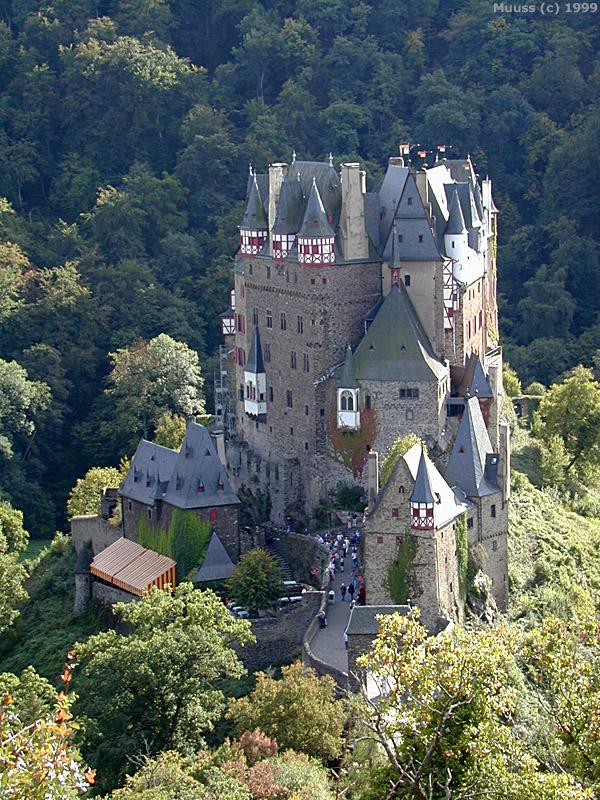
Here is a picture of the Rhineland-Palatinate: Eifel Mountains, Eltz Castle in the Elz Valley, Its not one of the Koberstein Castles but it gives a flavor of what the old castles look like.
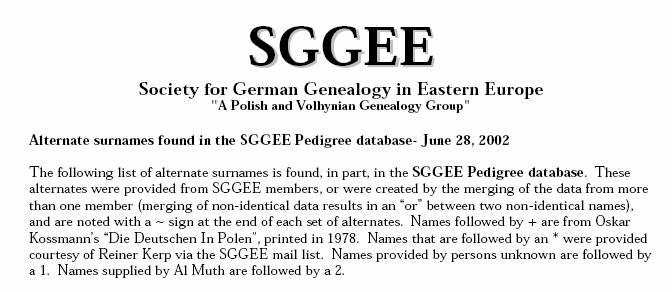
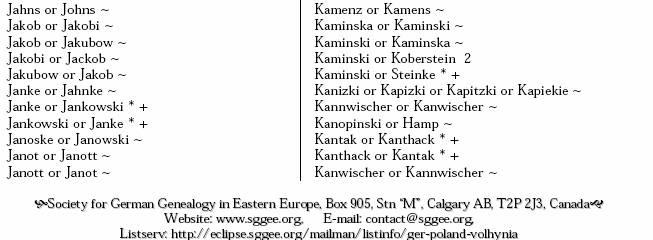
Apparently the Koberstein name is equivalant to Kaminski in Polish as noted in this document.
You can see the document quoted below at http://www.sggee.org/AlternateSurnamesDatabase.pdf
Here is the meaning of an interesting variation of Koberstein, Cooperstein:
What does the Cooperstein name mean?
1. Partly Americanized form of Ashkenazic Jewish Kup(f)erstein, an ornamental name composed of German Kupfer 'copper', Yiddish kuper + German Stein 'stone', Yiddish shteyn.
2. Respelling of German Koberstein. Compare Coverstone.
Common first names for surname Koberstein:
Brett, Emily , Eva, Mallory, Marni, Pryna, Sheree, Tanja , Vance, Wade
Common misspellings and typos for this name: Koberstien, Kboerstein, Koebrstein, oKberstein, Koberstei, Kobersteia, Koberstein, Koberstein, Kobersteon, Kobeestein, Kobersttein, Koberstein, Kobersteina, Kobersteine, Kobersteini, Kobersteino, Kobersteinn