| Name: John Koberstein | Profession: Regional supervisor of clinical engineering, Aurora Healthcare in Wisconsin |
| Relationship: | Country: United States of America |
| There's
a power shift in defibrillation therapy
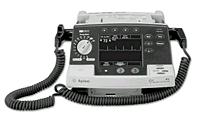
Are you ready to lead the charge? "Prove it." That's the challenge -- and the attitude -- you must be ready for when your organization decides to make the technology shift from monophasic to biphasic waveform defibrillation therapy. "Be prepared." That's the advice from biomedical engineers who are leading the charge in their organizations, using research, education, communication -- and the advocacy of an internal clinical champion -- to turn early doubters into enthusiastic supporters. A new standard of care With powerful scientific evidence available to prove the superiority of biphasic to monophasic waveforms, the healthcare industry is recognizing biphasic defibrillation waveform therapy as a new standard of care. The standard waveform for implantable defibrillators for over a decade, a low-energy biphasic waveform was first designed specifically for use in an automated external defibrillator by Heartstream (now part of Philips Medical Systems). The research that Heartstream began in 1992 led to the patented low-energy SMART Biphasic waveform, which is used in all new Philips Heartstream manual and automated external defibrillators (AEDs). Today, every defibrillator manufacturer offers biphasic therapy though not all share Philips' position, based on extensive scientific evidence, that low-energy in every case is an effective choice, without the potential adverse consequences of high-energy shocks. With new standard comes a new question With a monophasic defibrillator, the heart receives a single burst of electricity that moves from one pad to the other. Using a biphasic defibrillator, the heart receives two bursts of electricity, moving from one pad to the other (positive), then reversing direction (negative). While there is general agreement that biphasic therapy is more effective than monophasic therapy, it's not always clear to those who will use this new generation of defibrillators which biphasic waveform is the most effective. At the heart of the debate is the question of energy protocols -- low-energy (less than or equal to 200 joules) or high-energy (greater than 200 joules) -- and how the answer will affect patients' post-shock cardiac and neurological functions. How low can you go? At Aurora Healthcare in Wisconsin, where more than 100 older defibrillators are being replaced, John Koberstein was an early advocate of low-energy biphasic technology. The regional supervisor of clinical engineering, Koberstein analyzed literature and industry reports, organized demonstrations from several manufacturers, and was fortunate to have an ally, the clinical specialist in the cardiac ICU. "For years, we've been directed to stay on the cutting-edge of new technology, so the move to biphasic defibrillators -- even though it's one of the biggest changes we've seen in a long time -- was a natural for us," says Koberstein. But there was a recurring wave of doubt that a low-energy waveform could deliver the power necessary. Think about the patient "I read everything there was to read, and there wasn't an article out there that convinced me you need to go that high," notes Koberstein, referencing the ability of some biphasic defibrillators to escalate to 360 joules. "Think about what you’re actually doing to the patient and why, when you can use lower energy and get better outcomes. We're seeing it already." Seeing firsthand that less is more What they're seeing in Wisconsin is what they're seeing in New Jersey at Atlantic City Medical Center -- reports of better outcomes with Philips defibrillators, turning skeptics into believers. Ray Smitelli, director of clinical engineering at the Medical Center, explains. "Initially, there was a lot of resistance. The feeling was, 'If a lot is good, then more is better.' Many hadn't even heard of biphasic technology yet, and many others were certain we'd be compromising care in areas where we installed the low-energy defibrillators. "We spent a good deal of time and effort in a customer service role, working with clinical managers. We were fortunate that a clinician in the education department became a champion. "Now that we've had the Philips units deployed for awhile, we're seeing positive results and the pressure is on to update all the areas." Koberstein offers a similar scenario, "There was a contingent who was firm in saying 'I can't use it, not enough power.' Then the word started spreading about its success and the calls started coming in, 'Can you bring me up the biphasic unit?'" Fewer shocks, less dysfunction "The most important factor is the outcome. We're seeing that the patients are shocked fewer times at lower energy for the same benefit -- or better," says Koberstein. The results at these two hospitals align with published research that indicates low-energy biphasic therapy is as effective -- or more effective -- and causes less dysfunction than escalating, high-energy monophasic therapy. Apples and oranges, animals or humans Making a decision for your organization will require due diligence on your part. A few things to remember: Be wary of comparing results of studies when methods and patient populations are different. An attempt to do so would be like comparing apples and oranges. Biphasic waveforms are not all designed to work at the same energies. While SMART Biphasic is optimized for 150 joules, another biphasic waveform may require higher energies to defibrillate effectively. Be sure you know if research cited was conducted with humans or animals, and whether or not the data are presented in a peer-reviewed, published manuscript form, which is the more rigorous measure of performance, or in an abstract, which provides only vague preliminary trends. In addition to peer-reviewed, published manuscripts in respected professional journals, independent reports from organizations like ECRI and MEEN, the recommendations of the American Heart Association (AHA), and validation studies that use the AHA's rigorous process are a safe bet for objective data. Evaluate each biphasic waveform on the quality and breadth of research to demonstrate its performance in a given setting. Real people, published research The SMART Biphasic waveform has more peer-reviewed human research to support its efficacy than any other defibrillation waveform. In real-world clinical settings, with human heart attack victims, high-impedance patients, and in situations where there was a delay before the first shock, the research consistently indicates that the SMART Biphasic waveform does not require more than 150 joules to terminate ventricular fibrillation. With Smart Biphasic, there's a change in the way energy is delivered to the patient rather than a change in energy. "Good to very good evidence" In 2000, the AHA classified the waveform used in SMART Biphasic defibrillators (low-energy biphasic truncated exponential -- or BTE) as Class IIa. A Class IIa intervention is "acceptable, safe, and useful in clinical practice," is "considered intervention of choice by majority of experts," and is supported by "good to very good evidence." The AHA has no classification for energies higher than 200 joules. Beyond the shock, there's more to gain Low-energy biphasic technology also means defibrillators can be smaller, lighter and easy to carry, essential features for AEDs. They are also reliable and easy to use. "Time is of the essence in a code so it's important that the unit is easy to use and that the right energy gets to the patient as quickly as possible," says Koberstein. "The Philips Heartstream units -- both AEDs and the manual ones -- fit the bill." "The reliablity is a big plus," echoes Smitelli. "These are full-featured but a lot less problematic -- and they're incredibly light. We love them." Get additional information Information on the SMART Biphasic waveform and biphasic waveform energy protocols can be ordered using the reply card in this issue of Probe. Copies of the published research are available from your Philips sales representative. There's a power shift in defibrillation therapy Are you ready to lead the charge? "Prove it." That's the challenge -- and the attitude -- you must be ready for when your organization decides to make the technology shift from monophasic to biphasic waveform defibrillation therapy. "Be prepared." That's the advice from biomedical engineers who are leading the charge in their organizations, using research, education, communication -- and the advocacy of an internal clinical champion -- to turn early doubters into enthusiastic supporters. A new standard of care With powerful scientific evidence available to prove the superiority of biphasic to monophasic waveforms, the healthcare industry is recognizing biphasic defibrillation waveform therapy as a new standard of care. The standard waveform for implantable defibrillators for over a decade, a low-energy biphasic waveform was first designed specifically for use in an automated external defibrillator by Heartstream (now part of Philips Medical Systems). The research that Heartstream began in 1992 led to the patented low-energy SMART Biphasic waveform, which is used in all new Philips Heartstream manual and automated external defibrillators (AEDs). Today, every defibrillator manufacturer offers biphasic therapy though not all share Philips' position, based on extensive scientific evidence, that low-energy in every case is an effective choice, without the potential adverse consequences of high-energy shocks. With new standard comes a new question. With a monophasic defibrillator, the heart receives a single burst of electricity that moves from one pad to the other. Using a biphasic defibrillator, the heart receives two bursts of electricity, moving from one pad to the other (positive), then reversing direction (negative). While there is general agreement that biphasic therapy is more effective than monophasic therapy, it's not always clear to those who will use this new generation of defibrillators which biphasic waveform is the most effective. At the heart of the debate is the question of energy protocols -- low-energy (less than or equal to 200 joules) or high-energy (greater than 200 joules) -- and how the answer will affect patients' post-shock cardiac and neurological functions. How low can you go? At Aurora Healthcare in Wisconsin, where more than 100 older defibrillators are being replaced, John Koberstein was an early advocate of low-energy biphasic technology. The regional supervisor of clinical engineering, Koberstein analyzed literature and industry reports, organized demonstrations from several manufacturers, and was fortunate to have an ally, the clinical specialist in the cardiac ICU. "For years, we've been directed to stay on the cutting-edge of new technology, so the move to biphasic defibrillators -- even though it's one of the biggest changes we've seen in a long time -- was a natural for us," says Koberstein. But there was a recurring wave of doubt that a low-energy waveform could deliver the power necessary. Think about the patient "I read everything there was to read, and there wasn't an article out there that convinced me you need to go that high," notes Koberstein, referencing the ability of some biphasic defibrillators to escalate to 360 joules. "Think about what you’re actually doing to the patient and why, when you can use lower energy and get better outcomes. We're seeing it already." Seeing firsthand that less is more. What they're seeing in Wisconsin is what they're seeing in New Jersey at Atlantic City Medical Center -- reports of better outcomes with Philips defibrillators, turning skeptics into believers. Ray Smitelli, director of clinical engineering at the Medical Center, explains. "Initially, there was a lot of resistance. The feeling was, 'If a lot is good, then more is better.' Many hadn't even heard of biphasic technology yet, and many others were certain we'd be compromising care in areas where we installed the low-energy defibrillators. "We spent a good deal of time and effort in a customer service role, working with clinical managers. We were fortunate that a clinician in the education department became a champion. "Now that we've had the Philips units deployed for awhile, we're seeing positive results and the pressure is on to update all the areas." Koberstein offers a similar scenario, "There was a contingent who was firm in saying 'I can't use it, not enough power.' Then the word started spreading about its success and the calls started coming in, 'Can you bring me up the biphasic unit?'" Fewer shocks, less dysfunction "The most important factor is the outcome. We're seeing that the patients are shocked fewer times at lower energy for the same benefit -- or better," says Koberstein. The results at these two hospitals align with published research that indicates low-energy biphasic therapy is as effective -- or more effective -- and causes less dysfunction than escalating, high-energy monophasic therapy. Apples and oranges, animals or humans. Making a decision for your organization will require due diligence on your part. A few things to remember: Be wary of comparing results of studies when methods and patient populations are different. An attempt to do so would be like comparing apples and oranges. Biphasic waveforms are not all designed to work at the same energies. While SMART Biphasic is optimized for 150 joules, another biphasic waveform may require higher energies to defibrillate effectively. Be sure you know if research cited was conducted with humans or animals, and whether or not the data are presented in a peer-reviewed, published manuscript form, which is the more rigorous measure of performance, or in an abstract, which provides only vague preliminary trends. In addition to peer-reviewed, published manuscripts in respected professional journals, independent reports from organizations like ECRI and MEEN, the recommendations of the American Heart Association (AHA), and validation studies that use the AHA's rigorous process are a safe bet for objective data. Evaluate each biphasic waveform on the quality and breadth of research to demonstrate its performance in a given setting. Real people, published research The SMART Biphasic waveform has more peer-reviewed human research to support its efficacy than any other defibrillation waveform. In real-world clinical settings, with human heart attack victims, high-impedance patients, and in situations where there was a delay before the first shock, the research consistently indicates that the SMART Biphasic waveform does not require more than 150 joules to terminate ventricular fibrillation. With Smart Biphasic, there's a change in the way energy is delivered to the patient rather than a change in energy. "Good to very good evidence" In 2000, the AHA classified the waveform used in SMART Biphasic defibrillators (low-energy biphasic truncated exponential -- or BTE) as Class IIa. A Class IIa intervention is "acceptable, safe, and useful in clinical practice," is "considered intervention of choice by majority of experts," and is supported by "good to very good evidence." The AHA has no classification for energies higher than 200 joules. Beyond the shock, there's more to gain Low-energy biphasic technology also means defibrillators can be smaller, lighter and easy to carry, essential features for AEDs. They are also reliable and easy to use. "Time is of the essence in a code so it's important that the unit is easy to use and that the right energy gets to the patient as quickly as possible," says Koberstein. "The Philips Heartstream units -- both AEDs and the manual ones -- fit the bill." "The reliablity is a big plus," echoes Smitelli. "These are full-featured but a lot less problematic -- and they're incredibly light. We love them." Get additional information. Information on the SMART Biphasic waveform and biphasic waveform energy protocols can be ordered using the reply card in this issue of Probe. Copies of the published research are available from your Philips sales representative. |
|